BACK
Human side of routine work
In my last article, Routine Work is Where Strategy Begins, I talked about two ways to make repetitive work strategic: spotting patterns and understanding concepts.
Patterns show you opportunities, and concepts give you purpose but there’s a third and very important dimension: the people doing the work.Behind every ticket, every transaction, and every task, there’s a person. The one assigned to the ticket, the one who reviews it, the one who handles escalations. It’s crucial to pay attention to this person: their knowledge, well-being, state of mind, capacity, and capabilities.
The Emotional Impact of Routine Work
Let’s be honest; routine work can be tiring. You might answer the same type of question 50 times in a week or resolve another dispute for the exact same reason as yesterday. It can get worse during downtime, and it also doesn’t help when a customer is irate or abusive. This can take a toll on your mind and mental health; it can affect how you show up for the next customer, teammate, and even yourself.
The repetition can blur into monotony, but I’ve also found that routine work can be deeply satisfying when you connect it to people and can quantify the impact of your work. In Customer Success, it’s satisfying to see a high CSAT and Net Promoter Score (NPS). It’s validating when your speed saves a customer hours of stress, or when a thoughtful explanation results in gratitude. Those moments are fuel; they make your work worth it.
The big question is: How do you regulate yourself? How do you keep yourself motivated? especially because, realistically, you won’t feel energised all the time.
Have a routine at the start and at the end of your day. Have your devotion, meditation, or quiet time. Build a routine that puts you in a better headspace. Work out if you enjoy the gym. Listen to your favourite podcasts and songs.
Keep a task list. Write out what you plan to achieve in a day or week. If you’re in Customer Success, it could be aiming higher than the average number of tickets you handle in a day, or targeting five positive ratings in a week from the customers, partners, or businesses you engage with.
Maintain a brag book. Write down your wins: from how you calmed an irate customer, to solving a complex problem, and/or prevented customer churn. This helps you see your growth and motivates you to do more. Take your self-assessment seriously. Take yourself seriously. Take your work seriously.
Take breaks. Eat well. Drink water, coffee, or tea and whatever you like (not alcohol, you don’t want to be fired, lol). Add stretches where you can.
Try therapy, if you can afford it. Your well-being matters.
And while managing your own energy is important, there’s another truth you can’t ignore: routine work is never just about you. The way you show up directly affects the people you work with, the customers you serve, and the outcomes your business delivers. That’s why the people side of routine work deserves just as much attention.
Why People Matter in Routine Work
It’s easy to think of routine work as robotic - follow the process, tick the boxes, close the ticket and move on. But in reality, most routine work involves people on the other end: waiting for help, counting on your part of the process to make progress, or waiting for a decision or confirmation.
Even the best automation can’t replace human judgment, empathy, or deep listening. Every engagement shapes the way your business is perceived. Customers decide whether to trust you, and the quality of the outcome influences whether they stay. That means the people behind routine tasks and how they carry out those tasks truly matter.
So how do you support the people whose decisions shape your business’s perception? How do you empower them to solve problems? Shifting their mindset from just doing to caring deeply is key.
One of the biggest shifts in my career came when the Product and Engineering team explained the complexities and infrastructure of payments. We had product sessions where Paystack’s documentation was explained in detail. We were taught the function and expected behaviour of the various APIs and endpoints. That helped us understand the expected merchant experience, and we became better at spotting and explaining anomalies.
We also learned to use Postman to test endpoints and that changed everything. My colleagues and I felt empowered. To an extent, we could hold conversations with both technical and non-technical people, and we could make recommendations to businesses on how to achieve their goals in the absence of a full-suite solution. We were delivering value, and our customers were happy.
To deliver value at this level, three things matter: curiosity, empathy, and ownership. For people who have these qualities, do the following:
Feed their curiosity. Teach what you know, and teach how to learn.
Build strong onboarding programs and run trainings. Share both established knowledge and new developments. Where possible, explain the “why” behind the company’s vision and goals and help them see how their impacts
Host demo days or sessions to educate the team about new products/features and how they work before your customers are given access.
Include them in launch plans. Offer early access so they can test and get first-hand experience, enabling them to communicate value clearly to customers.
Assign projects that build problem-solving and decision-making. These could be special projects they lead independently or cross-functional initiatives. Work closely, provide tools, affirm good approaches, and correct bad ones.
Be empathetic and support well-being. Manage workloads with shifts and schedules where necessary. Equip them with reliable tools. Check in when they feel overwhelmed.
Create safe spaces. Use retreats, offsite, team bonding, cross-functional meetings, and quarterly retros to encourage honest reflection.
Appreciating the people sets the tone, but sustaining their motivation means weaving care and efficiency into every step of the routine.
Balancing Humanity with Efficiency
Helping people become more efficient at what they do is a must. It shows empathy and signals a company’s commitment to delivering excellence. Humanity and efficiency aren’t opposites; in fact, handling routine work with warmth and clarity often reduces back-and-forth and unnecessary escalations. Tools and automation can increase speed and reduce human error, hence, it is important to use them to handle repetitive tasks so people can focus on moments that require judgment and decision-making.
This balance isn’t just an abstract idea; it shows up in everyday choices and small adjustments that shape how work gets done. Let’s take a look at the examples below:
Example 1: We needed CS reps to work faster by reducing the number of clicks required to find transactions and merchants in our internal tool. My colleague introduced a tool called Alfred that lets you search using defined keywords. Alfred was connected to our internal tool with separate keywords for transactions and merchants search. We’d launch Alfred (it pops up like a search bar), enter an identifier, and it would locate and launch the page with more information. This allowed us answer more support tickets daily.
Example 2: At Mira, I created a Slack workflow for logging requests with the Engineering team. Our problem was unclear escalations because Ops reps sometimes didn’t fully understand the issues being escalated to them by our customers. That led to a lot of back-and-forth and a poor SLA for sharing feedback with customers. To solve this, I needed to systematically encourage the behaviour I wanted to see. I built a workflow with questions that encouraged better troubleshooting and evidence gathering before reporting. Find a screenshot below
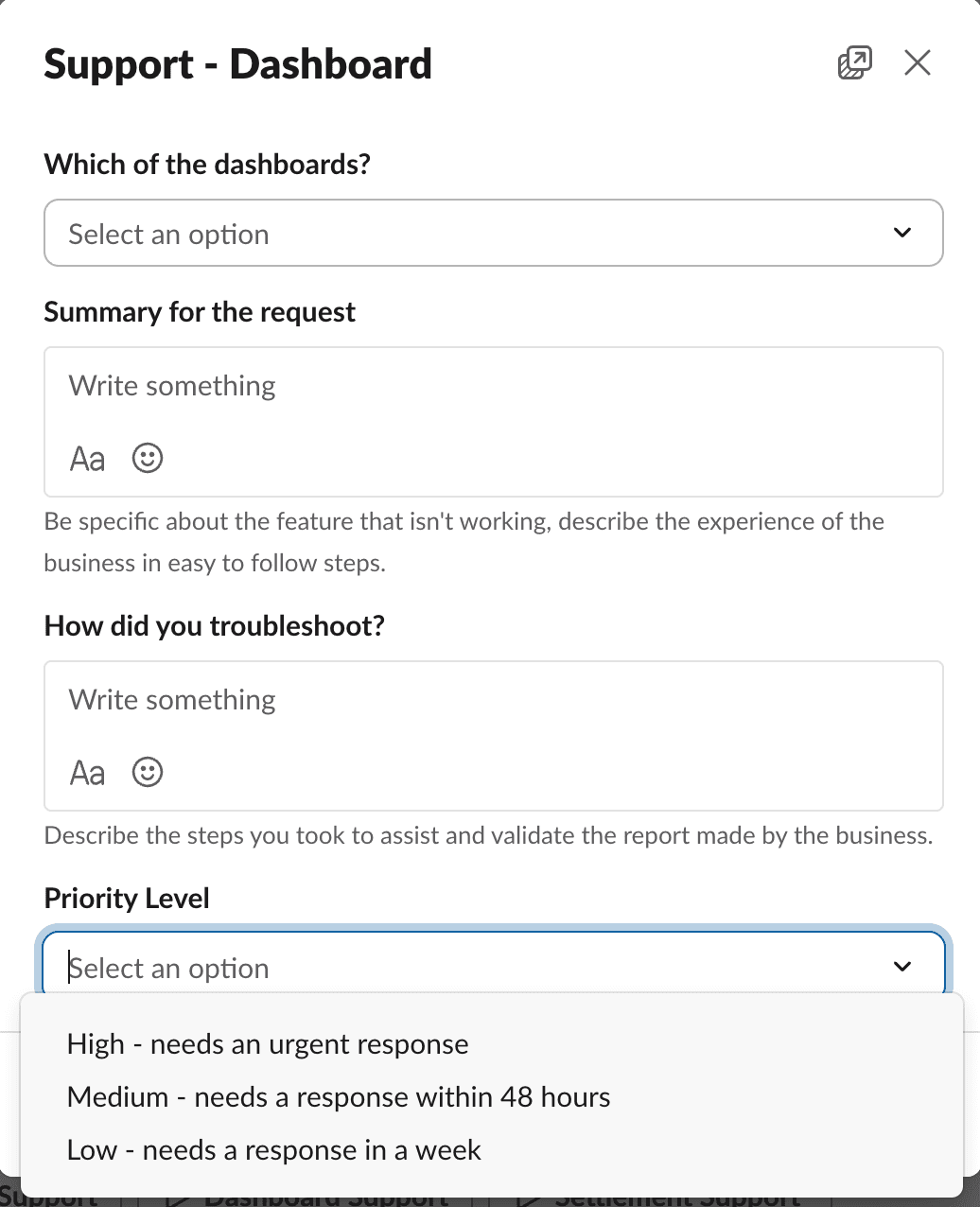
This improved escalation quality, engagement with Product and Engineering, and reduced escalations of common non-issues. Beyond that, the Ops team became better at engaging the businesses we serve. This is the impact of making the humans who carry out routine work more efficient. Overall, you make them better at their jobs.
Identify what improvement is to you. It could be identifying highly repetitive tasks and using a tool to handle them, freeing the team to focus on more complex work.
In conclusion.
Routine work might be the steady heartbeat of any operation, but it’s the people behind it who give it life. Their consistency, care, and commitment turn simple processes into lasting impact. Value the work, value the people; that’s how great systems thrive!
More